
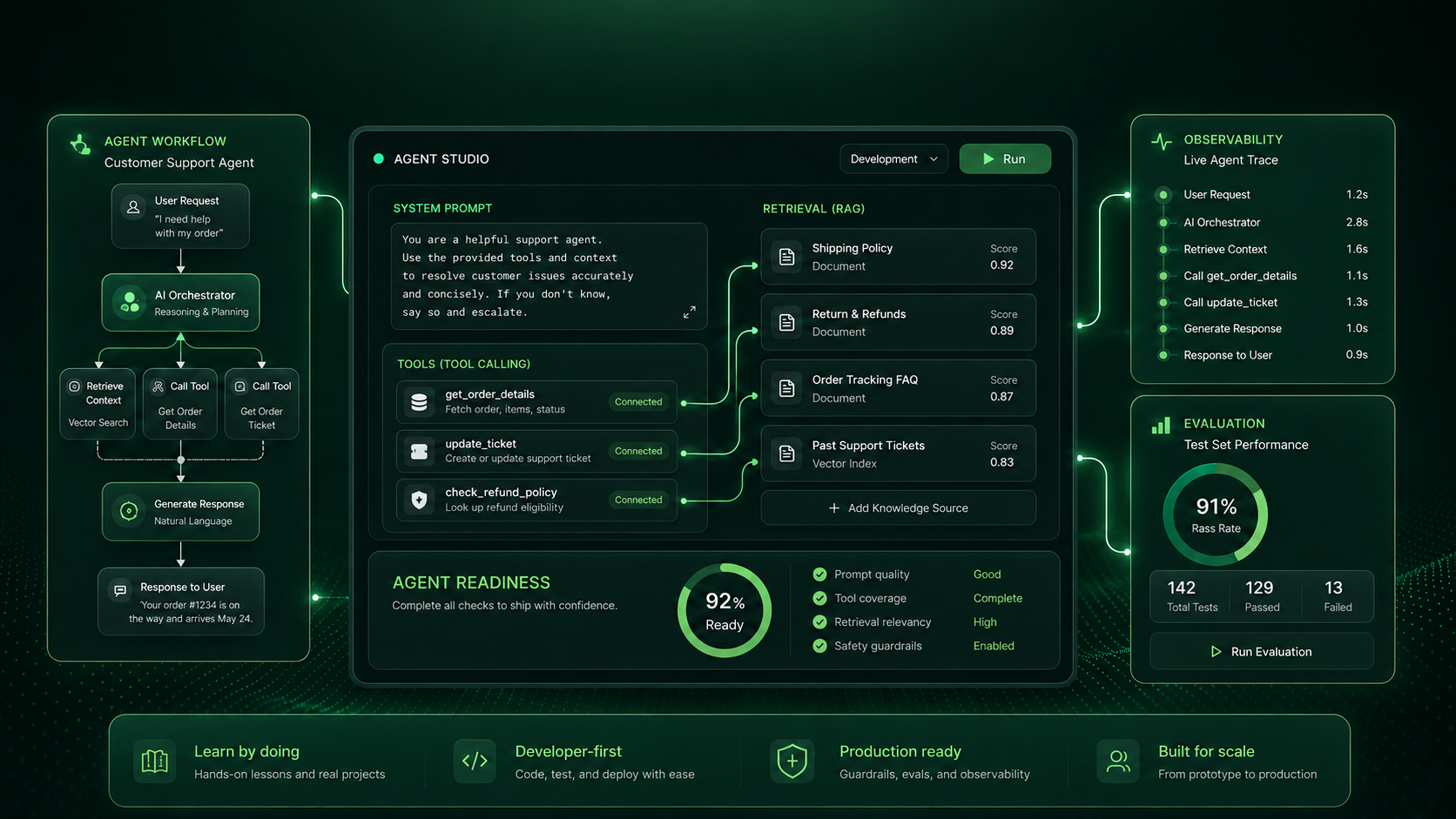
Move beyond surface-level tutorials and learn the mechanics behind LLM apps, retrieval, tools, and orchestration.
Use guided labs, coding tasks, and scenario-based exercises to build agents that work like real product systems.
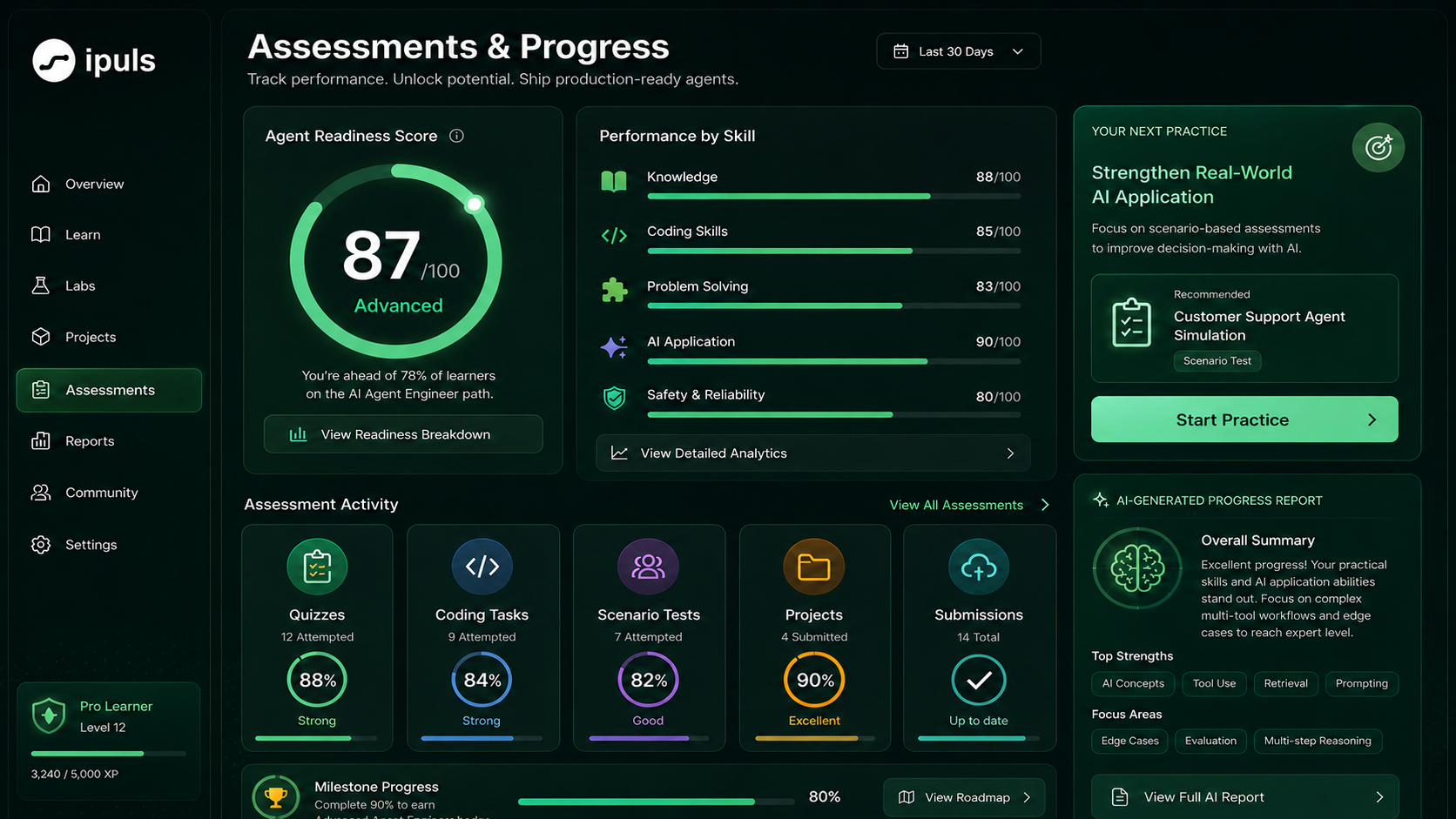
Assessments, projects, and AI-generated progress reports help learners and teams know what is actually improving.
Write prompts that improve structure, instruction following, context use, and tool decisions.
Understand tokens, context windows, reasoning behavior, hallucinations, latency, and response trade-offs.
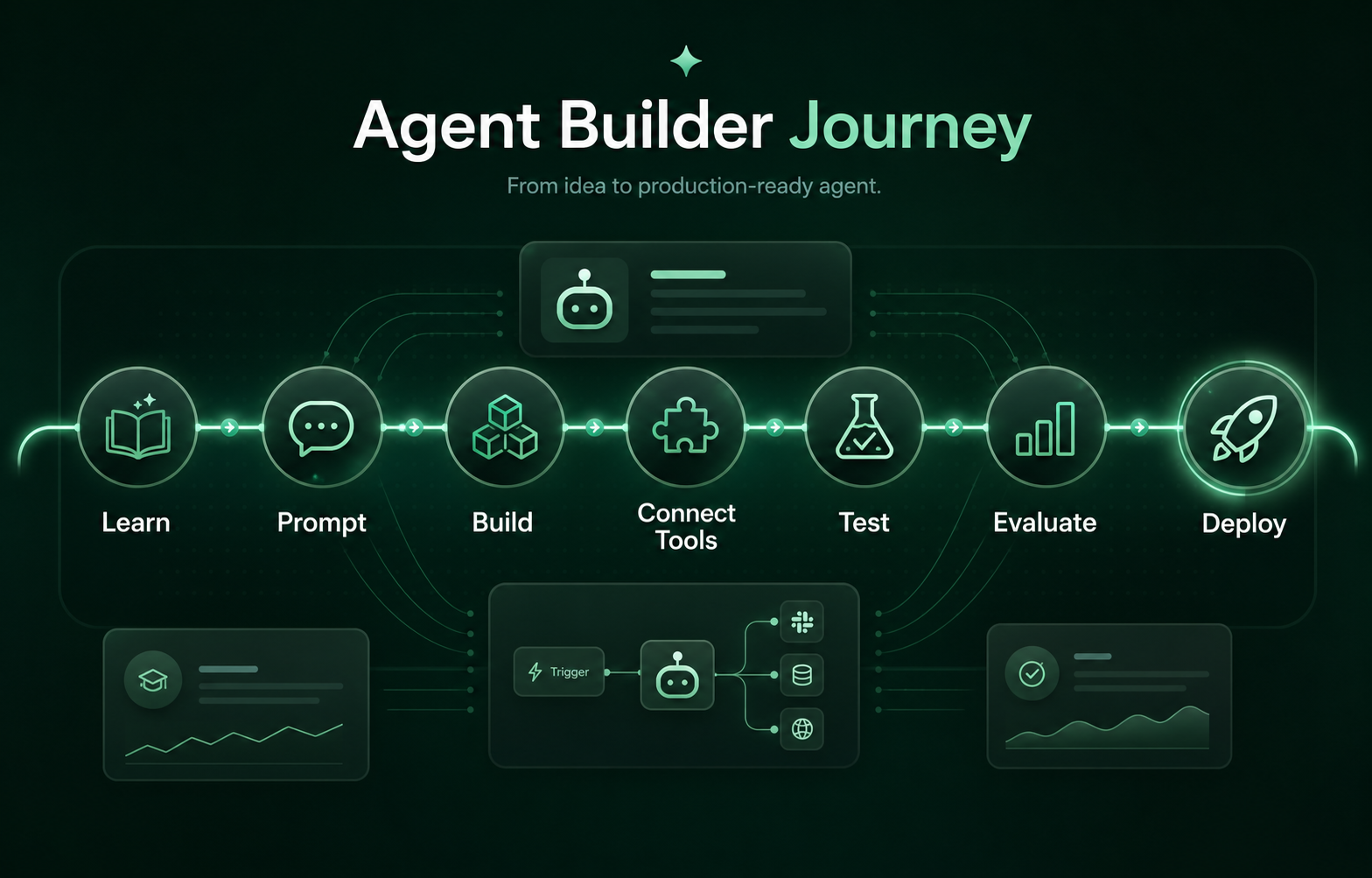
Build agents that plan, reason, take actions, and complete multi-step tasks with clear workflow structure.
Learn embeddings, chunking, retrieval, ranking, and grounding strategies for knowledge-aware AI apps.
Connect models to business systems, external APIs, and actions that make agents useful in production.
Understand modern agent connectivity patterns, context exchange, and protocol-driven tool integration.
Design orchestration patterns across prompts, tools, retrieval, memory, and evaluation checkpoints.
Measure response quality, edge cases, risk, and reliability so AI systems stay useful and trustworthy.
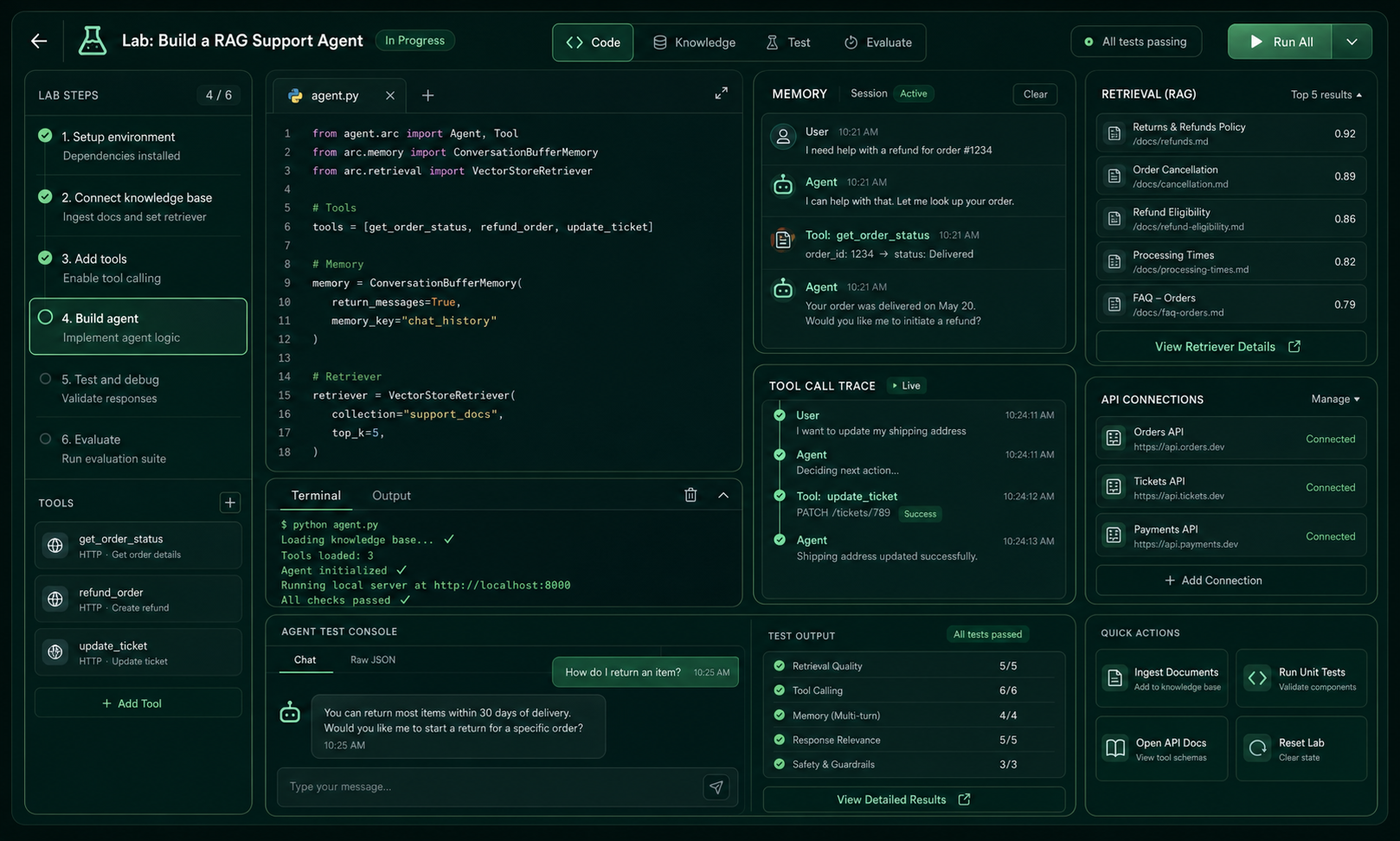
Build a chatbot with memory
Create a resume screening agent
Build a RAG knowledge assistant
Connect an agent to external APIs
Create a multi-agent workflow
Evaluate AI responses
Measure fundamentals across prompting, LLMs, retrieval, tools, and modern AI workflow concepts.
Validate whether learners can actually build agent flows, connect APIs, and debug applied AI systems.
Test reasoning, architecture choices, trade-offs, and response quality in realistic AI product situations.
Track project submissions, readiness scores, and AI-generated reports that show where to practice next.
Build AI confidence with structured paths, guided labs, assessments, and portfolio-ready agent projects.
Learn the patterns behind modern AI products and turn concepts into working systems with real workflow practice.
Upskill teams on practical AI workflows, shared protocols, evaluation discipline, and production-ready implementation habits.
Start learning how modern AI systems work, practice with real labs, build agents that connect to tools and APIs, and prove readiness with assessments, projects, and certifications.