
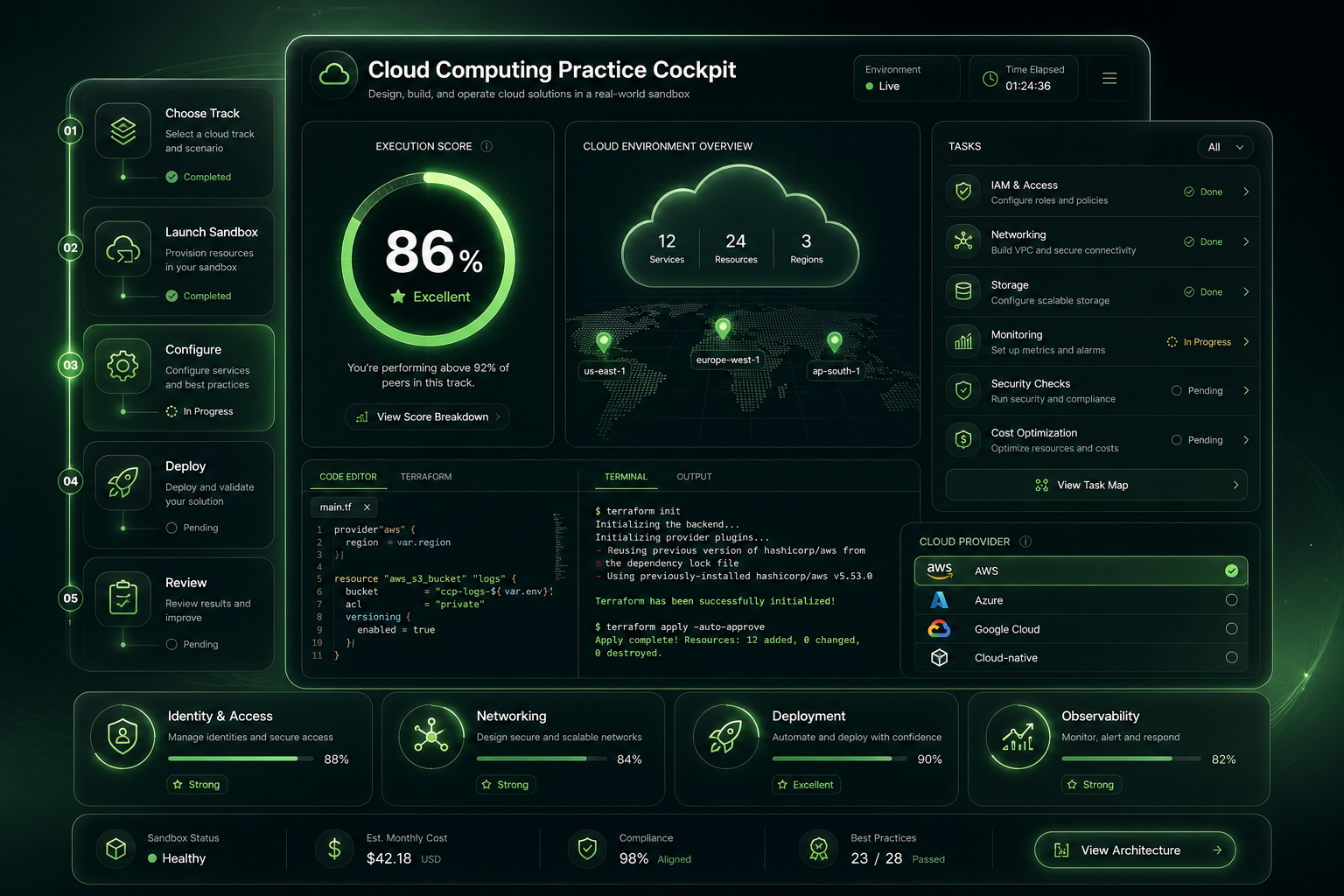
Practice inside environments that feel like actual cloud operations.
Follow step-by-step prompts that keep learners moving with confidence.
Finish every session with a clear report that explains what improved.
Learners can name services, but they still need to work through permissions, deployments, and failures.
Real cloud work includes tradeoffs, cleanup, validation, and recovery steps that tutorials rarely show.
Logs, metrics, and alerts mean little until a learner has a real environment to inspect and fix.
Cloud training should produce evidence that shows where the learner improved and what they should do next.
Step-by-step environments that teach a workflow from start to finish.
Best for
Beginners and certification prep
Open-ended tasks where learners diagnose and fix real configuration issues.
Best for
Intermediate builders
Short missions that reinforce speed, accuracy, and cloud recall.
Best for
Exam readiness
Multi-step scenarios that connect identity, deployment, and observability.
Best for
Job readiness
Roles, policies, service accounts, and permission boundaries.
VPCs, subnets, routing, security groups, and load balancing.
VMs, app services, serverless, and container deployments.
Buckets, lifecycle policies, databases, backups, and access.
Templates, repeatable deploys, and pipeline-driven changes.
Logs, metrics, alerts, recovery steps, and stability checks.
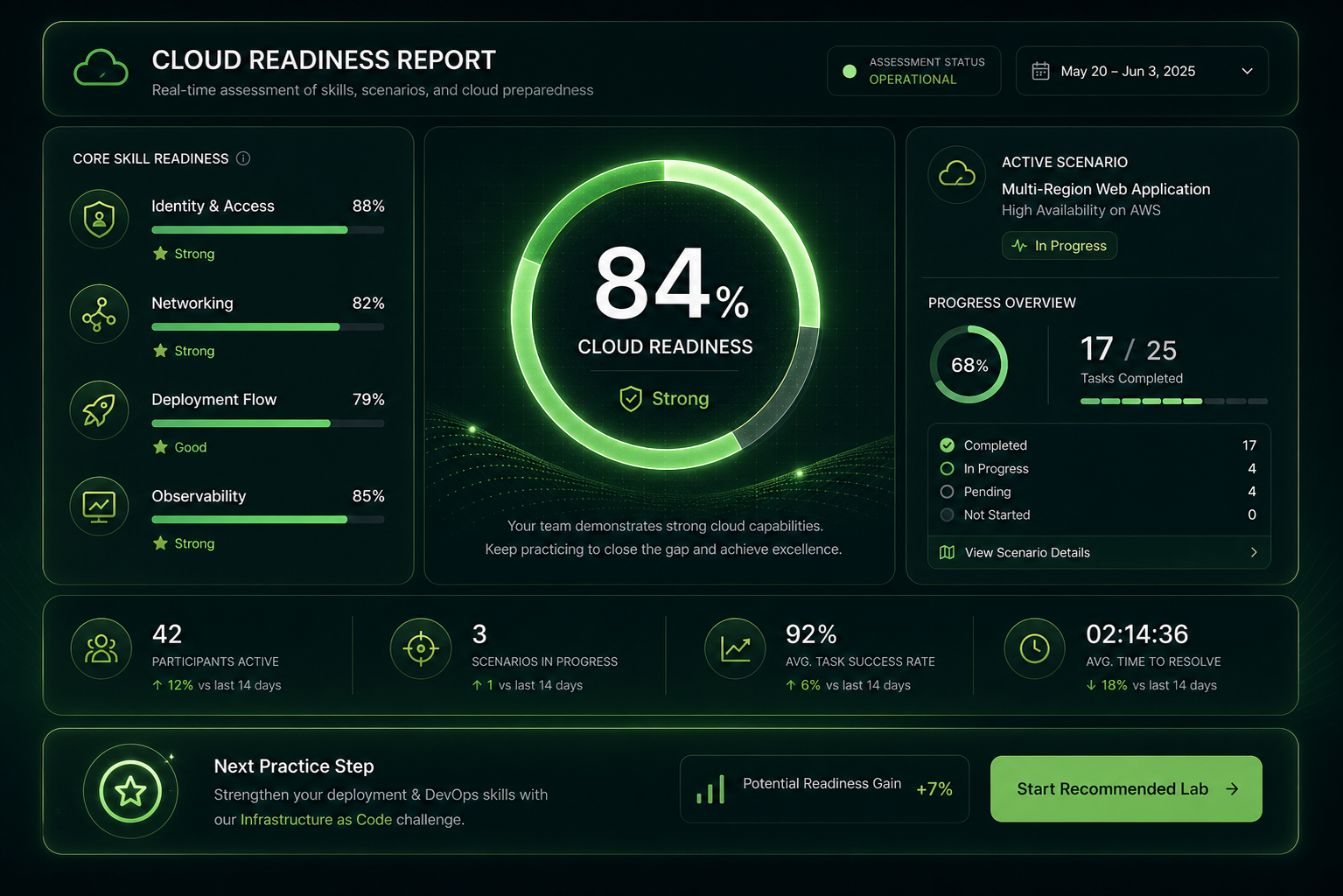
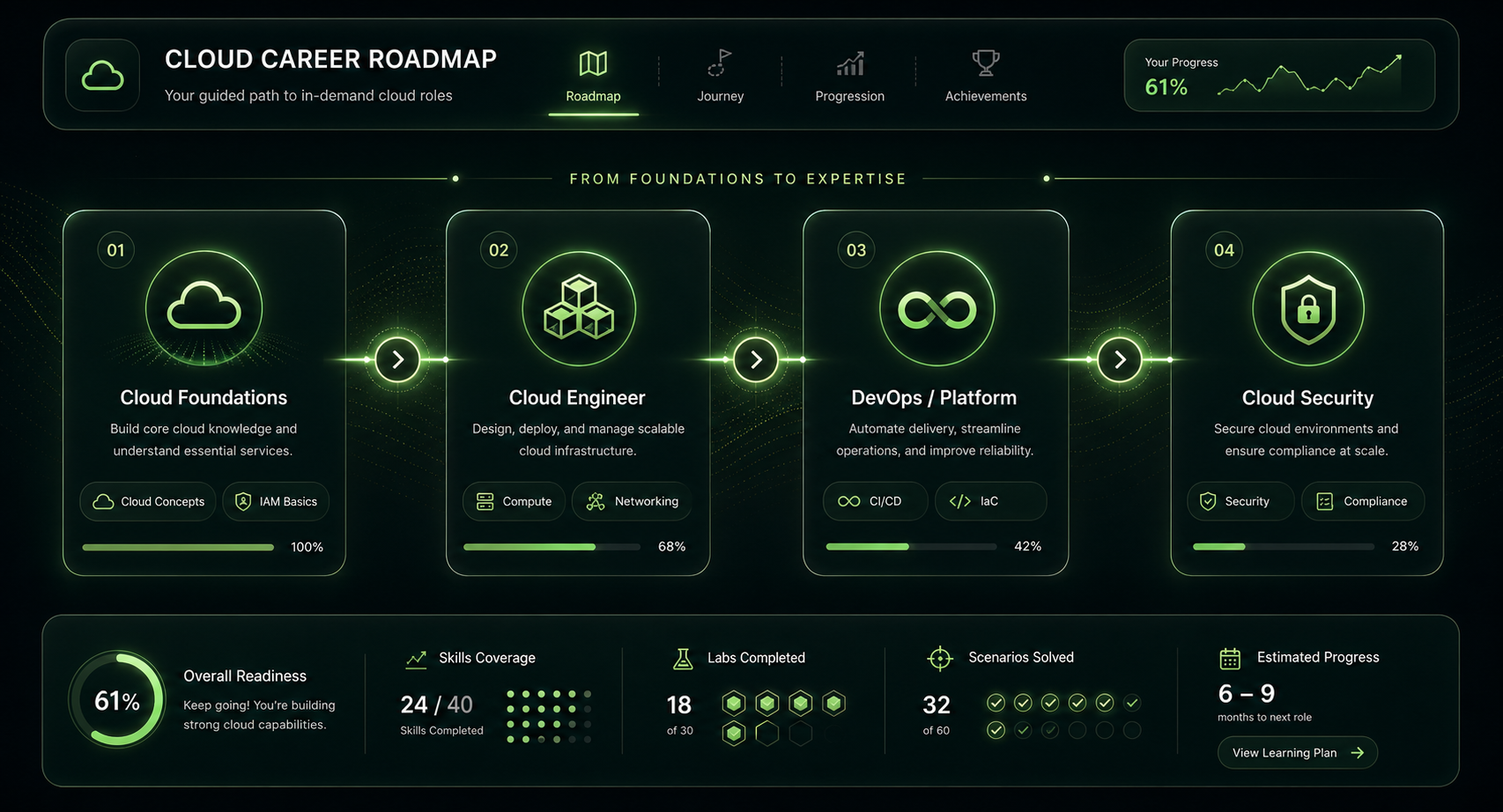
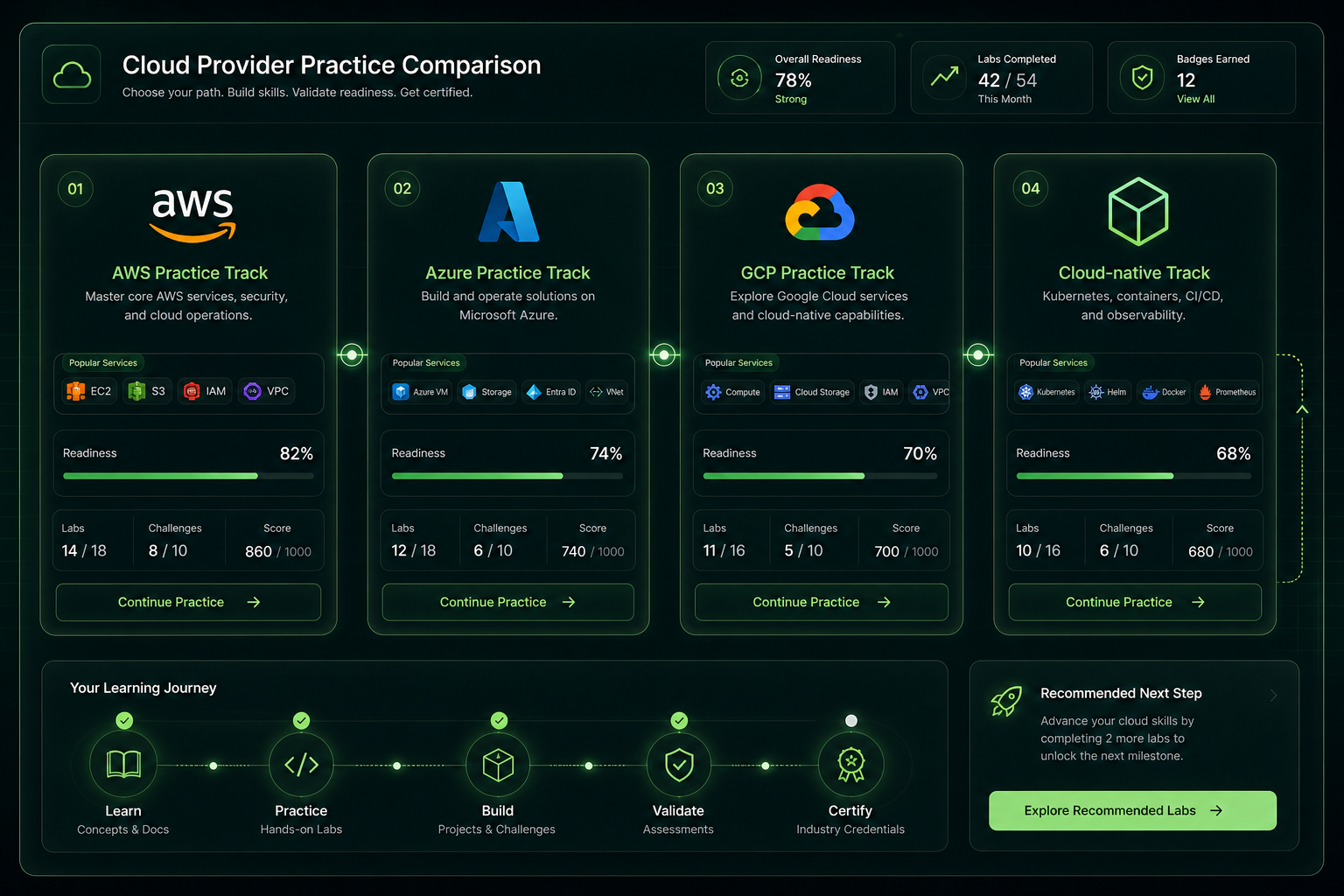
Launch guided cloud sandboxes, practice across AWS, Azure, GCP, and cloud-native systems, and finish every session with a report that shows what the learner can do next.