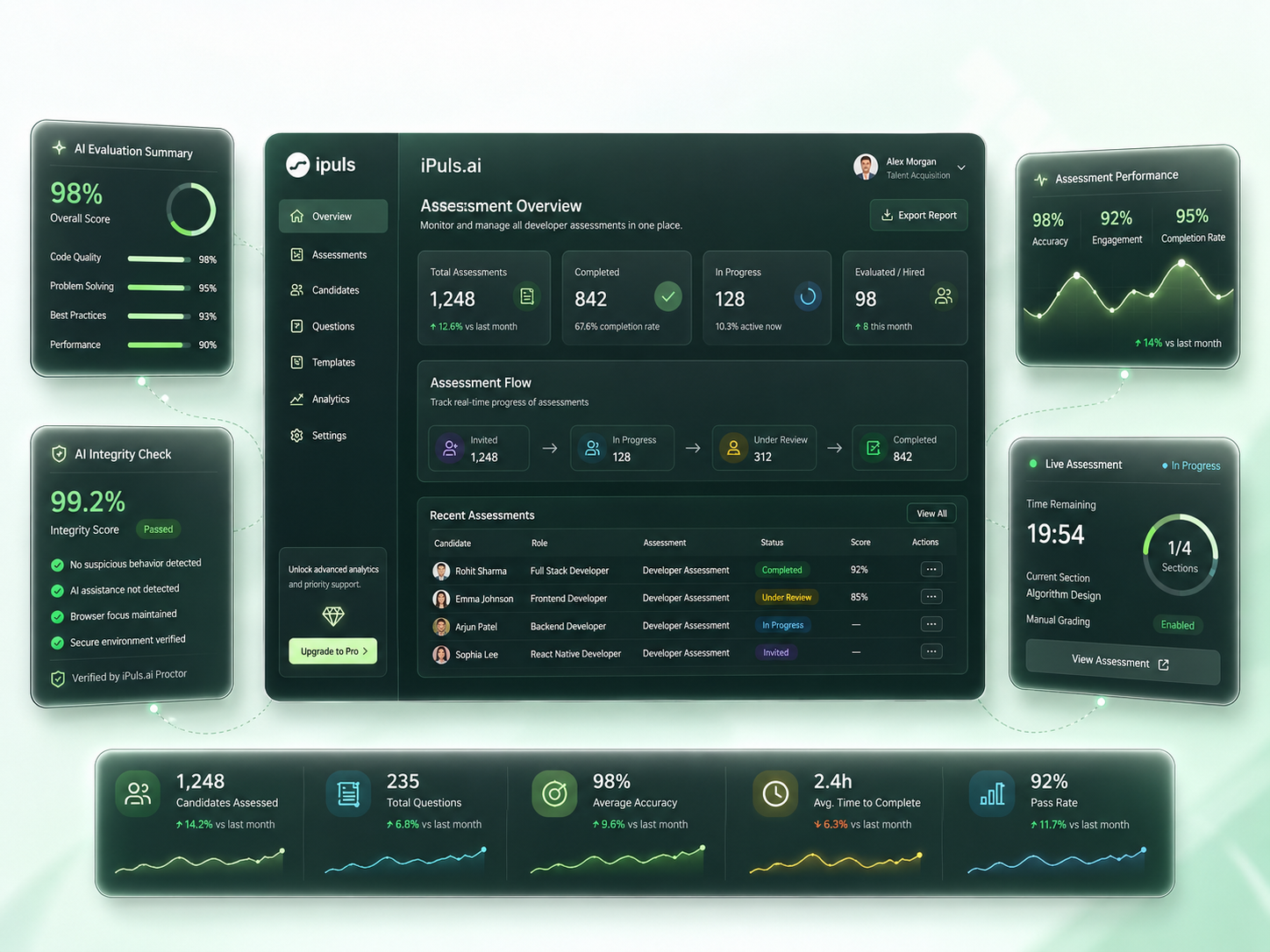
When organizations screen thousands of candidates, the default operational metric is often a simple score (e.g., "85/100"). However, reducing a candidate's complex capabilities to a single number breaks down at scale, leading to poor hiring decisions and biased selections.
The Failure Mode of Single-Score Evaluations
A score of 80 could mean two completely different things. For one candidate, it indicates perfect implementation of the core logic but a failure to write unit tests. For another, it indicates buggy core code but excellent comments and unit tests. These two candidates represent completely different risk profiles for a team.
Hiring teams need "evidence trails" rather than simple scores. They need to understand exactly where the points were lost, how the candidate structured their work, and how they handled edge cases.
Key Elements of Talent Intelligence
To turn simple scores into hiring intelligence, companies should implement three key structures:
- Benchmarking and Calibration: Compare a candidate's performance against the existing team's baseline and historical cohort data. This establishes a normalized, data-driven bar for what "good" looks like.
- Evidence Trails: Retain code playbacks, test runs, console logs, and step-by-step histories of the candidate's assessment session. This allows hiring managers to review the workflow itself during final reviews.
- Skill Matrices: Break down the candidate's performance into specific dimensions—such as code logic, test coverage, debugging speed, architecture, and system security.
"Hiring intelligence is about understanding the 'how' behind the score. It provides recruiters and managers with the confidence to make hiring calls backed by evidence."
Enabling Objective Debriefs
By using multi-dimensional skill profiles and full session records, hiring panels can conduct debriefs based on hard evidence rather than gut feelings. This eliminates unconscious bias and ensures that candidates are evaluated solely on their ability to execute the role's actual demands.