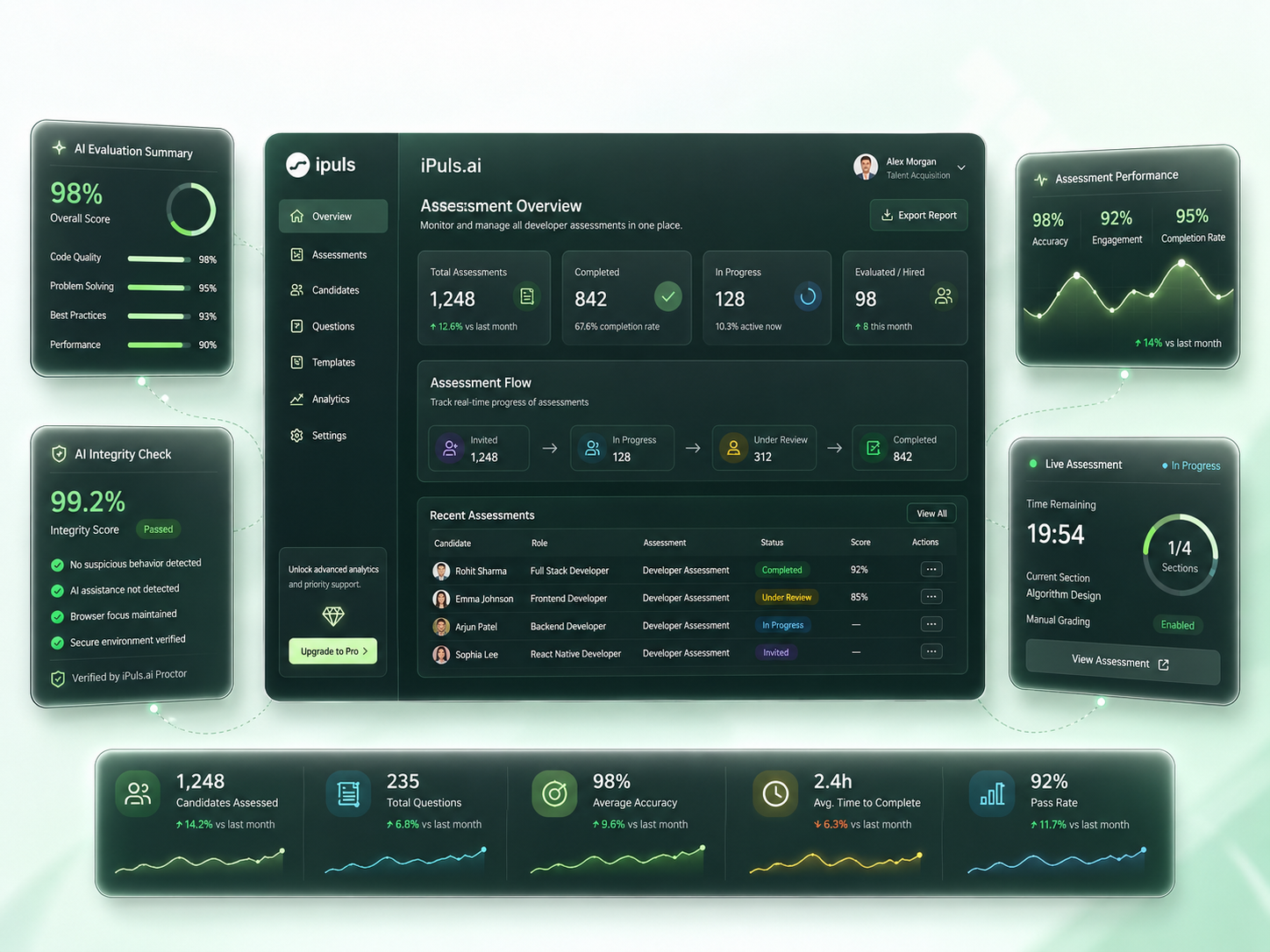

For years, the standard software engineering interview loop has revolved around generic data structures and algorithms (DSA) challenges. While DSA has its place, using it as the sole filter for backend, frontend, and site reliability roles leads to highly inaccurate hiring outcomes.
Why Generic DSA Loops Break Down
A generic DSA loop tests a candidate's familiarity with algorithmic puzzles that are rarely utilized in daily web development. This filters out highly experienced developers who specialize in building robust APIs, designing clean state management, or optimizing cloud infrastructure, while favoring recent graduates who have spent months memorizing coding puzzles.
To hire effectively, companies must customize the assessment loop to the specific role being filled. The evaluation should test the exact tools, architectures, and challenges the candidate will face on a daily basis.
Designing Custom Role Rubrics
Here is how a role-aligned evaluation framework should be structured across different roles:
- Backend Engineers: Evaluate database queries, schema design, caching strategies, API security, and integration with message queues.
- Frontend Engineers: Evaluate component modularity, state management, client-side performance, responsive layouts, and accessibility standards.
- DevOps and SREs: Evaluate container configurations, CI/CD pipelines, log analysis, system monitoring, and infrastructure troubleshooting.
A Alignment Blueprint for Hiring Teams
By aligning the interview scorecard with the actual demands of the role, companies can reduce time-to-hire, improve conversion rates, and build high-signal hiring pipelines that managers can trust.